WEEKLY INSIGHT
Week 44: Oct 25 - 31, 2026
_2.png)
Week 44: Oct 25 – 31, 2026
OUR FINAL WALK AROUND THE LANDSCAPE
Growing Grass in the Desert Starts Here
QUICK STATS
| Measure | This week |
|---|---|
| Year-to-date rainfall | 17.94 inches |
| Compared to normal | 1.25 inch BELOW |
| 24-hour average soil temperature | 76.5 °F |
| 5-day average soil temperature | 74.2 °F |
Rainfall measured at BES-TEX Supply, 4512 Adobe Dr., San Angelo, TX.
Soil temperature tracked using Syngenta GreenCast.
WHY WE DO THIS
This is the last Weekly Insight of the year. We start every year in Week 10 and finish in Week 44, and there's a reason for that. Those are the weeks your grass is awake and working. Once it goes to sleep, there's not much to tell you except "leave it alone."
I write this because the right information at the right time saves you money, water and a lot of frustration. Most yard problems I see at the counter didn't start this week. They started months ago with a missed step.
So today we take one last walk around the yard together. First, the calendar your grass keeps. Then a checklist for the off-season, because there's still plenty to do.
THE CALENDAR YOUR GRASS KEEPS
Warm-season grass in West Texas sleeps about four months and works about eight. Everything you do to it should follow that schedule.
| Season | Weeks | About when |
|---|---|---|
| Asleep | 1–10 | January to early March |
| Waking up | 11–20 | Mid-March to mid-May |
| Full speed | 21–35 | Late May through August |
| Slowing down | 36–45 | September to early November |
| Asleep again | 46–52 | Mid-November through December |
Pre-emergent: February, May and September. It's the same three months no matter what grass you have, because it's the weed seeds that sprout on schedule, not your lawn. Three applications means that if you miss one, you're not wide open for the whole season. Two cautions: read the label for your grass, and don't put it where you're seeding.
Feed it while it's working, never while it's sleeping. Our first frost usually comes around November 15, so your last feeding goes down by mid-October. That's why nobody is fertilizing this week.
Here's how much nitrogen each grass needs in a year:
| Grass | Pounds of nitrogen per 1,000 sq ft per year |
|---|---|
| Bermuda | 6 (3 in spring, 3 in fall) |
| St. Augustine | 5 |
| Zoysia | 3 |
| Buffalograss | No more than 2 |
That's pounds of nitrogen, not pounds of fertilizer. A 50 lb bag of 21-7-14 holds about 10½ lb of actual nitrogen. To put down 1 pound of nitrogen per 1,000 square feet, you'd spread about 4¾ lb of that bag. And never put down more than 1 pound of nitrogen per 1,000 square feet at a time. More than that doesn't catch you up. It burns the yard.
Bermuda is a nitrogen hog. Buffalograss is the opposite: feed it too much and the weeds and Bermuda move in and take over. Zoysia grows slowly, and overfeeding it just builds thatch.
St. Augustine has its own headache here. Our soils run a pH of 8 to 8½ in heavy clay loam, which locks up iron. That's why St. Augustine can turn yellow even when it's well fed. Iron fixes the color.
Customers tell us all the time they're doing everything right. Then we talk a little longer. They mow every two weeks, water every three days, and feed once a year, and they want to know why the yard looks rough. Think of fertilizer as the gas in your mower. You wouldn't fill the tank once in March and expect that mower to run all summer. Your grass burns fuel every time it grows back after a mowing. One tank of gas won't mow all summer, and one feeding won't either..
THE FINAL WALK AROUND THE YARD
The grass is slowing down, but the yard isn't done with you yet. Here's what to check off before winter.
The beds. This is still the best time of year to mulch. Mulch holds moisture through a dry winter and keeps the soil from swinging hot and cold on freezing nights. Pull the weeds first, then spread 2 to 3 inches, never more than 3. Keep it a few inches away from stems and trunks. A mulch volcano piled against the bark holds moisture there and invites rot and bugs.
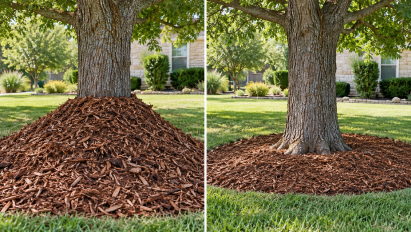
AI illustration, BES-TEX Supply
Perennials. Leave the dead tops standing for now. Those old stems protect the crown through the cold. Cut them back in late February, before the new growth starts. Woody ones like lantana, salvia and esperanza especially need to wait. Cut them now and you're inviting cold damage. Ornamental grasses get cut in late February too, and roses get pruned around Valentine's Day. The one exception: pull off diseased leaves now so the problem doesn't spend the winter in your bed.
Annuals. Once the first freeze kills the summer annuals, pull them. Then it's planting time for cool-season color like pansies, snapdragons, dianthus and ornamental kale.
Leaves. A blanket of leaves on the grass blocks the sun and holds moisture, which invites disease and can smother the lawn. A light layer can be mowed right back in with a mulching mower. A heavy layer needs to be raked or bagged. Don't throw them away. They make good mulch for the beds or food for the compost pile.
Sprinklers. Cut your run times back. Dormant grass still needs a deep drink about every three weeks if it doesn't rain. Moist soil holds heat better than dry soil, so water a day or two ahead of a hard freeze. And wrap that backflow preventer and pull the hoses off the faucets before the first one hits.
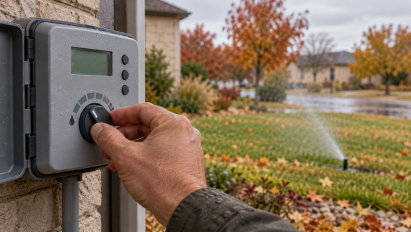
AI illustration, BES-TEX Supply
Trees and shrubs. Fall is the best time to plant them in Texas. Established trees, evergreens especially, need a deep watering once a month through a dry winter.
Fire ants. They don't take the winter off. Treat mounds on warm, dry days.
Equipment. We covered putting your mower up in Week 43, so here's the short version: put the fuel up right, and bring it in now before the spring line forms. While you're at it, clean, sharpen and oil your hand tools and pruners before they go on the wall. We sharpen blades and chains every Wednesday, ready for pickup Thursday.
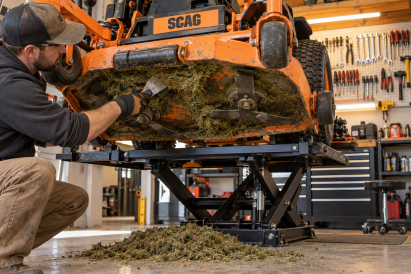
AI illustration, BES-TEX Supply
SEE YOU IN FEBRUARY
That's a wrap on this year's Weekly Insight. Thank you for reading every Sunday, and for bringing your questions to the counter. That's how we all get better at growing grass in the desert.
When we come back in February, we'll start with St. Augustine. It keeps a different calendar than Bermuda, and it's the grass I get the most questions about. We'll also get you ready for that first round of pre-emergent.
Until then, the doors are open and the coffee's on. Bring us your mower, your questions or a sample of whatever's ailing your yard.
Happy Sunday, Fun Day
BES-TEX Supply, LLC
4512 Adobe Dr., San Angelo, TX 76903
325.653.1300
Monday – Friday, 8 a.m. – 5 p.m.
About BES-TEX Supply
Since 2003, BES-TEX Supply has helped homeowners, landscapers, ranchers, and pest management professionals across West Texas make better decisions through science-based education and quality products.
Our goal isn't simply to sell products. It's to help you understand why solutions work.
Enjoy this Weekly Insight?
Share it with a friend or neighbor who enjoys learning about lawns and landscapes.
Have an idea for a future article?
Email us your suggestion. It might become a future Weekly Insight.
monte@bes-tex.com