
Understanding the Soil Beneath Our Feet
Part 1 of 4 – Why Is San Angelo's Soil So Different?
Published July 5, 2026
"Healthy landscapes don't begin with fertilizer. They begin with healthy soil."
Before We Talk About Grass, Let's Talk About Soil
Every week we answer questions about brown lawns, struggling trees, yellow shrubs, weeds, irrigation, insects, and fertilizers.
Although those problems may look different above the ground, many of them have one thing in common.
They begin below the surface.
Notice we said soil, not dirt.
Those two words are often used as if they mean the same thing, but they don't.
Dirt is simply soil that has been moved from where nature intended it to be. Soil is a living system.
Healthy soil contains minerals, organic matter, water, air, fungi, bacteria, insects, earthworms, plant roots, and billions of microscopic organisms working together every day. It stores water, supplies nutrients, supports plant roots, and provides the foundation for every healthy lawn, tree, and shrub.
Throughout the month of July, we're going to explore the science of soil and how it influences every landscape in the Concho Valley.
Every Handful of Soil Has a Story
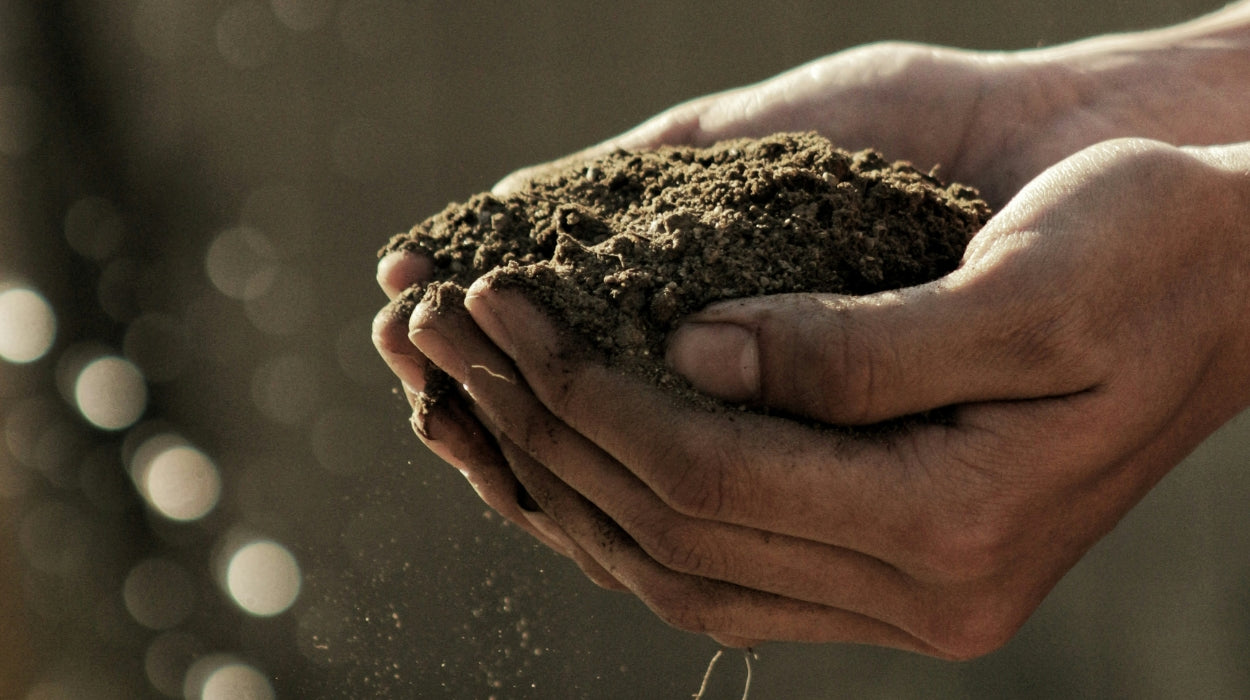
Walk outside and pick up a handful of soil.
It may not look remarkable, but that handful represents millions of years of history.
Long before San Angelo existed, much of West Texas was covered by a shallow inland sea. Over millions of years, that sea deposited thick layers of limestone, shells, clay, and other marine sediments across the region.
As the sea gradually disappeared, rivers carved valleys through those deposits, winds redistributed fine particles, and weather slowly transformed solid rock into the soils we work with today.
That ancient history explains why limestone is so common throughout Tom Green County. It also explains why many homeowners encounter caliche while digging fence posts, planting trees, or installing irrigation systems.
Our landscapes today are shaped by geology that began millions of years before the first lawn was planted.
Why Is San Angelo Different?

One reason gardening and lawn care can be challenging here is that San Angelo lies within a transition area where several major Texas landscapes begin to change.
Travel east toward the Hill Country and rainfall gradually increases.
Travel west and the climate becomes more arid.
Travel north and the landscape transitions toward the Rolling Plains.
Travel south and limestone hills become more common.
Because these regions meet near Tom Green County, the soils beneath our feet are surprisingly diverse. Even neighborhoods only a few miles apart can have noticeably different soil characteristics.
That is one reason advice that works in Houston, Tyler, or Dallas doesn't always produce the same results in San Angelo.
Rainfall Shapes More Than Our Landscapes

Average annual rainfall around San Angelo is about 21 inches.
Compare that with other parts of Texas.
| Location | Average Annual Rainfall |
|---|---|
| San Angelo | ~21 inches |
| Austin | ~35 inches |
| Dallas | ~39 inches |
| Houston | ~50 inches |
| Beaumont | ~60 inches |
Rainfall doesn't simply determine how often we water.
Over thousands of years, it helps create the soil itself.
Areas with abundant rainfall slowly lose calcium and other minerals as water carries them deeper into the soil profile. Those soils gradually become more acidic.
Our climate is much drier.
Because we receive less rainfall, calcium carbonate remains much closer to the surface. That is one reason many soils around San Angelo are naturally alkaline.
This is not a problem that needs to be "fixed." It is simply one of the characteristics of living in West Texas, and it influences which plants grow well and how we manage them.
One County, Different Soils
A good example can be found just a few miles apart.
Grape Creek
North of San Angelo, many areas around Grape Creek have deeper soils formed from alluvial deposits and finer sediments, although the exact soil varies from property to property. These deeper soils often store more water but can also become compacted if repeatedly trafficked or overwatered.
Christoval
South of San Angelo, especially on the limestone uplands around Christoval, soils are commonly shallower and more influenced by limestone bedrock. Along the South Concho River there are also deeper alluvial soils. Rooting depth, drainage, and water-holding capacity can differ substantially over short distances.
The lesson is simple.
There is no single "San Angelo soil."
Every landscape has its own characteristics, which is why diagnosing the soil is often the first step toward solving a landscape problem.
What Does This Mean for Your Landscape?
Healthy soil influences nearly everything we see above ground.
It affects:
-
How deeply roots grow.
-
How efficiently water enters the soil.
-
How long moisture remains available to plants.
-
How nutrients move through the soil.
-
Which weeds are most likely to invade.
-
How trees, shrubs, and turf respond during drought.
When we understand the soil first, decisions about irrigation, fertilization, and plant selection become much more effective.
Science Behind the Soil
Parent Material
Every soil begins as something else.
The rock or sediment from which a soil develops is called its parent material.
Around much of Tom Green County, that parent material is limestone and ancient marine sediment. It influences soil texture, drainage, pH, and ultimately the kinds of plants that thrive here.
Understanding parent material helps explain why two landscapes only a few miles apart can behave very differently.
Looking Ahead
This article is the first in our July series, Understanding the Soil Beneath Our Feet.
Next week we'll look closer at what makes up soil itself.
We'll explore:
-
Sand, silt, and clay.
-
Soil structure.
-
Organic matter.
-
Soil compaction.
-
Why roots need oxygen just as much as they need water.
By the end of this series, you'll have a better understanding of why some landscapes thrive while others struggle, and why successful lawn care always starts below the surface.