
A Better Lawn Starts Before the Sod Arrives
We have made it to the middle of August, and I've got some good news.
We're finally starting down the other side of the West Texas summer hill.
This Week in San Angelo
Rainfall YTD: 15.70"
Above normal: +1.97"
5-Day Average Soil Temperature: 100.2°F
5-Year Average: 101.2°F
10-Year Average: 97.8°F
Our soil is still hot, actually 2.4°F warmer than our 10-year average for this date.
But the days are getting shorter, and we're reaching the time of year when the seasonal trend begins working in our favor.
We're certainly not finished with hot weather. This is West Texas, and late August and September can still bite us.
But we're headed toward fall.
And personally, it can't get here fast enough. I'm ready for pumpkin pie.
So why are we talking about installing a new lawn in the middle of August?
Because September is one of our favorite times to install sod, and a September lawn starts in August.
Don't Start With the Sod
I've said this for years:
“Spend a month preparing your yard and a weekend laying sod, or spend a weekend preparing and the rest of your life trying to get the lawn level.”
That's the lesson this week.
You can buy beautiful TifTuf, Tifway 419, Celebration, Palisades or Raleigh sod, but none of it will fix bad preparation underneath.
The sod follows the ground you give it.
Low spot underneath? You'll have a low spot in the lawn.
High spot? Your mower will find it.
Poor drainage? Sod won't fix it.
Living common Bermuda underneath your new hybrid Bermuda? It can come right back through it.
That's why the job starts several weeks before the sod truck arrives.

West Texas sod installation. The finished lawn can only be as good as the preparation underneath it.
STEP 1 Kill What's There
If you're replacing an existing lawn, particularly common Bermuda with an improved or hybrid Bermuda, don't just scalp it and cover it up.
Bermuda is a survivor.
It spreads through stolons above the soil and rhizomes below it. If living common Bermuda remains underneath TifTuf or Tifway 419, it can eventually grow right back through the new lawn.
Once the two Bermudas are mixed together, selectively separating them becomes extremely difficult.
We want the old lawn dead before the new lawn goes down.
A Little Chemistry Helps
This is where understanding mode of action helps both the professional and the homeowner understand what we're trying to accomplish.
Roundup QuickPRO
Glyphosate, Group 9: Systemic and non-selective. It is absorbed through green plant tissue and moves within the plant. That's important when we're trying to control perennial Bermuda, not simply burn off the leaves.
Diquat, Group 22: Causes rapid injury to contacted green tissue and gives us the fast visible burndown.
But remember:
Brown doesn't necessarily mean dead.
We're not simply trying to make the lawn brown. We're trying to keep that established Bermuda from coming back.
Ornamec 170
Fluazifop-P-butyl, Group 1: A systemic grass herbicide with a different mode of action from glyphosate.
GrassOut Max
Clethodim, Group 1: Another systemic grass-selective herbicide for susceptible grasses on appropriate labeled sites.
OUR BES-TEX PRODUCTS
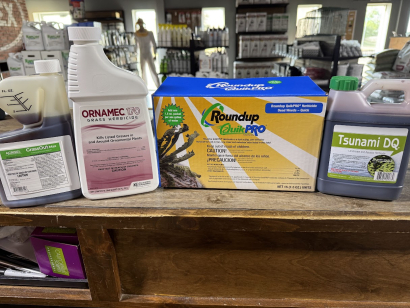
Use the BES-TEX herbicide photograph here showing GrassOut Max, Ornamec 170, Roundup QuickPRO and Tsunami DQ.
Different herbicides work differently. Understanding the active ingredient and mode of action helps us choose the right tool for the job.
On difficult, actively growing Bermuda renovation sites, one approach we have used at BES-TEX involves different modes of action when the current product labels permit the use and tank mixture.
Three active ingredients do not automatically mean three times the control.
Product, rate, timing, plant condition and the LABEL all matter.
STEP 2 Give It Time
Don't spray an established Bermuda lawn today and tear it up tomorrow.
For systemic herbicides to do their job, we generally want the existing Bermuda green and actively growing at application.
Apply according to the label, then give the chemistry time to work.
Don't immediately scalp, till or remove the treated turf.
Wait. Watch.
If healthy green Bermuda starts coming back, you're not finished.
Difficult perennial Bermuda may require another treatment according to the label.
And that's another reason we're talking about September sod on August 16.
We have time.
I'd much rather discover surviving common Bermuda before we put several thousand dollars worth of new sod over it.
STEP 3 Build the Yard
Once the old vegetation is dead and all herbicide label restrictions have been satisfied:
Clean it.
Grade it.
Water it.
Let it settle.
Grade it again.
Remove rocks, roots and construction debris.
Check every sprinkler head.
Look at where water travels after irrigation.
Find your high spots.
Find your low spots.
Remember to leave room for the thickness of the sod alongside sidewalks, curbs and driveways.


If there's a dip in the dirt today, there's going to be a dip in the lawn tomorrow.
This is also the time to soil test when possible.
Don't automatically add phosphorus simply because you're installing sod. Find out what the soil needs, then fertilize accordingly.
STEP 4 Pick the Right Grass
Before choosing a grass, do something simple.
Look up.
How much strong sunlight actually reaches the ground?
Bermuda
Best with roughly 7–8+ hours of strong sunlight.
Bermuda loves our West Texas heat, handles traffic extremely well and is very well adapted to our area.
Shade is one of its weaknesses.
Zoysia
Generally performs with around 5–6+ hours of good sunlight and offers better shade tolerance than Bermuda.
St. Augustine
Usually our better option as sunlight becomes more limited.
Raleigh can often perform with approximately 4–6 hours of good light under suitable conditions.
These are practical guidelines, not hard biological cutoffs. Light intensity, morning versus afternoon sun, tree canopy, grass variety, irrigation and management all affect turf performance.
At BES-TEX, we commonly work with:
Celebration Bermuda
TifTuf Bermuda
Tifway 419 Bermuda
Palisades Zoysia
Raleigh St. Augustine


Don't ask:
“What's the best grass?”
Ask:
“What's the best grass for MY yard?”
That's a much better question.
STEP 5 Sod and Seed Are NOT on the Same Calendar
This is important.
September can be excellent for sod and late for Bermuda seed at the same time.
Sod arrives as an established plant.
A Bermuda seed starts from zero.
It has to germinate, establish roots, develop leaves and mature before cooler temperatures and shorter days begin slowing warm-season growth.
Texas A&M recommends spring and early summer for establishing Bermudagrass from seed, while late summer and fall can be good periods for establishing sod.
Going Into September
Bermuda, Zoysia & St. Augustine SOD:
✅ GOOD WINDOW
Bermuda SEED:
⚠️ GETTING LATE
We would rather plant Bermuda seed in spring or early summer and give the young turf a long warm growing season.
But another seed is just coming into its season.
What About Five Star Tall Fescue?
This is where the calendar flips.
Bermuda is a warm-season grass.
Tall fescue is a cool-season grass.
Texas A&M lists September through November as the preferred establishment period for tall fescue seed.
So while our Bermuda-seeding season is winding down, fescue-seeding season is beginning.
Texas A&M's general establishment recommendation for tall fescue is 6 - 8 pounds per 1,000 square feet. With Five Star, follow the current seed label for the specific blend.
But here's the other half of the story.
San Angelo isn't ideal tall-fescue country.
Tall fescue can make a beautiful cool-season lawn, but our summer heat and water requirements make it a higher-input grass here. Texas A&M considers tall fescue better adapted primarily to North Texas and the Panhandle.
That doesn't mean you can't grow it.
It means you need to understand what you're committing to before you plant it.
Right grass. Right place. Right season.
STEP 6 Sod Day
If we've done everything correctly, this should almost be the easy part.
The old lawn is dead.
The irrigation works.
The drainage is correct.
The ground is smooth.
The grass has been selected.
Now the sod arrives.
And remember, sod is perishable.
Have the ground completely prepared before the truck arrives.
Start along a straight edge.
Fit the pieces tightly.
Stagger the seams like brickwork.
Don't overlap.
Don't stretch the sod.
Don't leave large gaps.

As you complete sections, begin watering.
On a warm, dry, windy West Texas afternoon, don't leave freshly harvested sod baking while you finish the entire yard.
The Barefoot Method
Here's one of my favorite tools for installing sod.
Take your shoes off.
Walk the new lawn barefoot.
Heel-press the seams.
Feel for high spots.
Feel for low spots.
Feel for areas where the sod isn't making good contact with the soil underneath.
A sod roller can also help where appropriate, but don't underestimate what your feet can tell you.
Roots need soil contact.
STEP 7 Water the Soil, Not Just the Grass
Immediately after installation, thoroughly wet the sod and the prepared soil underneath it.
During early establishment, keep the sod and immediate root zone adequately moist without keeping the area continuously waterlogged.
How often should you water?
There isn't one magic schedule.
Temperature matters.
Wind matters.
Soil matters.
Sunlight matters.
Sprinkler output matters.
A sunny, windy West Texas afternoon at 98°F isn't the same as a cloudy, calm day at 78°F.
Don't just look at the clock. Check the soil.
As roots develop, gradually increase the time between irrigation events and encourage deeper rooting.
When Can I Mow?
Use the tug test.
Gently try to lift a corner of the sod.
If it comes up easily, it isn't ready.
If it resists you, roots are beginning to anchor into the soil underneath.
Once you can mow without moving the sod, begin mowing at the proper height for that grass.
And remember the one-third rule:
Never remove more than about one-third of the green leaf tissue in a single mowing.
Here's the Whole Job
AUGUST
Kill → Wait → Check for regrowth → Clean → Grade → Check irrigation → Let it settle
SEPTEMBER
Choose the right grass → Install → Water → Root → Mow
And remember:
“Spend a month preparing your yard and a weekend laying sod, or spend a weekend preparing and the rest of your life trying to get the lawn level.”
A great lawn isn't created on sod day.
It's created during the weeks before sod day.
We've reached the top of our West Texas summer hill. We're starting down the other side, and September is coming.
It can't get here fast enough for me. I'm ready for pumpkin pie.
If you're considering a new lawn, bring us pictures before you start. Tell us what's growing there now, how much sunlight the yard receives, what your irrigation looks like and what you want from the finished lawn.
We'll help you build it from the ground up.
Always read and follow the current pesticide label. The label determines approved sites, rates, tank mixtures, restrictions and planting intervals.
One Last Thing Before You Go...
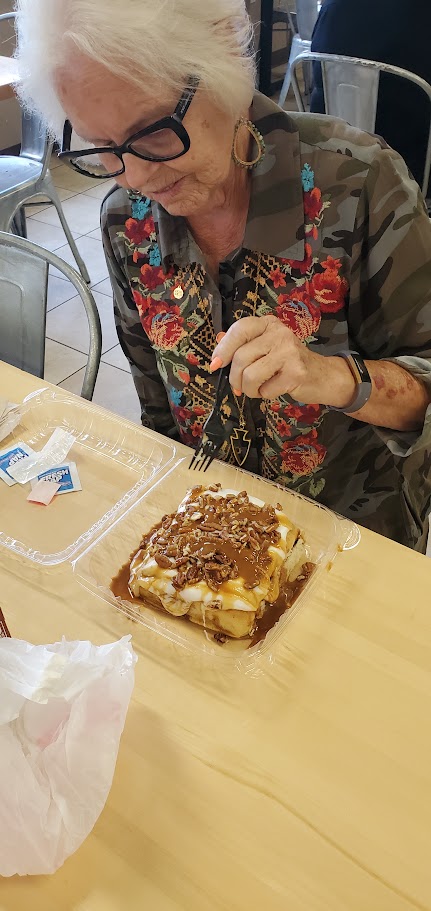
Today, August 16, is my mother's birthday.
A mother doesn't shape us all at once,
but a little every day.
In the things she teaches,
the things she corrects,
the things she forgives,
and the things she lets us learn for ourselves.
Years pass, children grow,
and somewhere along the way we realize
how much of who we became
was shaped by the hands that raised us.
No matter how old we get,
there is something pretty special
about knowing Mom is still in our corner.
Today I'm thankful,
not only for everything you've done,
but for all the pieces of you
that became pieces of me.
Happy Birthday, Mom.
I'm glad you're on my side, I Love You More